|
|
Anne-Marie Brouwer is a Senior Researcher at the Netherlands Organisation for Applied Scientific Research TNO Human Factors, and Professor at Radboud University where she holds the chair ‘Mental State Monitoring’. Her research interests are motivated by the question of how we can extract information about cognitive and emotional state from physiological signals and implicit behavior outside the lab, and how we can sensibly and responsibly harness this information in applications that benefit people’s well-being and performance. Based on neurocognitive, psychophysiological and psychological research she exploits different types of measured signals (e.g., EEG, skin conductance, eye movements and facial expression) which are, in turn, associated with different types of underlying cognitive and emotional processes. These different types of signals can inform monitoring systems about the individual’s current task or context. Therefore, with the application in mind, she usually follows a multi-modal approach including simultaneous use of wearables and high-end equipment. |
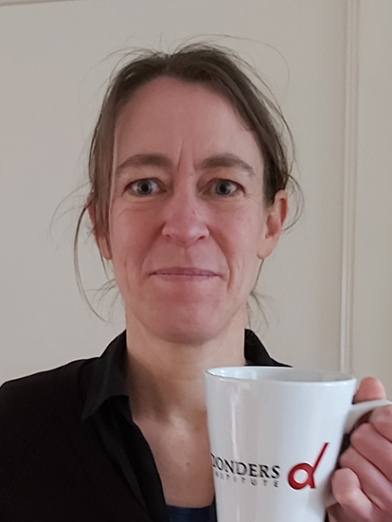
Talk title : Multimodal estimation of cognitive state - from up in the air to feet on the ground
Abstract: The increasingly cognitive nature of military operations in the air, and the challenging conditions under which this occurs, makes it important to have a good understanding of information processing by human operators working individually, but also in teams. Besides self-report, continuous and possibly real-time information about processes relevant to information processing can be helpful to understand and evaluate operators’ performance and adapt the task environment. Starting from our own and others’ previous work on markers of attention and shared attentional engagement, we want to move forward to quantify attentional and team processes in real, aviation life, using multiple measures extracted from speech, facial expression, EEG, EDA, ECG and eye tracking. We aim to quantify important, but hard to capture psychological concepts such as Team Situation Awareness, while on the other hand, not forgetting that the ultimate aim is to predict relevant performance outcomes. Given the huge variation in real life tasks, and the lack of one-size-fits-all solutions, we need to think about these things in a systematic yet context-dependent way. It is an ongoing journey that I would like to discuss with you mostly along our first explorations and results in a large experiment where we recorded measures as mentioned above in fifty ‘navigator’ – ‘pilot’ pairs performing a semi-realistic drone task.
|
|
Wendy Mackay is a Research Director, Classe Exceptionnelle, at Inria Saclay where she leads the Ex-Situ research lab in Human-Computer Interaction and Professor Attaché at the Université Paris-Saclay LISN lab for Computer Science. She was the 2021-2022 Annual Chair for Computer Science for the Collège de France, received the ACM/SIGCHI Lifetime Research award, is a Doctor Honoris Causa, Aarhus University, an ACM Fellow, a member of the ACM CHI Academy and a recipient of a European Research Council Advanced Grant. Her research combines theoretical, empirical, methodological and design contributions that re-envision the interaction between human users and intelligent systems. Unlike traditional human-in-the-loop systems that focus on algorithms, she demonstrates how to create “human-computer partnerships” that increase human capabilities and result in intelligent systems where the combination of human and system is better than either alone. |

Talk title : Creating Human-Computer Partnerships
Abstract: How can we can design “human-computer partnerships” that take optimal advantage of human skills and system capabilities? Artificial Intelligence research is usually measured in terms of the effectiveness of an algorithm, whereas Human-Computer Interaction research focuses on enhancing human capabilities. I argue that better AI algorithms are neither necessary nor sufficient for creating more effective intelligent systems. Instead, we need to focus on the details of interaction and how to successfully balance the simplicity of the user's actions with the expressive power of the system. We have developed a novel approach that uses “generative theories of interaction” adapted from existing natural and social sciences to analyze existing interactive systems and create innovative new ones. This talk describes the basic theory, illustrated with multiple examples, and explains how participatory design and rigorous qualitative methods such Comparative Structured Observation offer new possibilities for developing safety-critical systems.